
If it’s your first time applying to private pre-kindergarten programs for your son, you may be worried about choosing the right school, or how to best present your son as an applicant. Not to worry, first-timers – as a parent, there is plenty you can do to help support your son’s application to a pre-K program. We recently spoke with Kate Kausch, Director of Lower School Admissions here at The Fessenden School, about her advice to parents when it comes to navigating private pre-kindergarten admissions for the first time.
Kate recommends six tips to help parents who are just starting to investigate pre-K programs:
1. Realize That Your Son’s Learning Style is Just Emerging
An important part of private pre-kindergarten admissions is understanding that everyone, including children, has their own learning style. Some of us like to learn by reading, others by observing , while others prefer hands-on learning through trial and error.

At the tender age of four, your son’s approach to learning may not have become fully apparent yet. Moreover, he will have no educational track record to review. All of this means you shouldn’t make assumptions about how you think a specific teaching methodology will cater to your son’s preferred way of learning – because it’s not set in stone. Look for a school that’s able to adapt and work with a variety of learning styles so you can partner with a school that can work with whatever may emerge.
“Instead of teaching to fit each child’s style, teachers should be aware of different styles, help students become aware of different styles, and encourage students to use as wide a variety of styles as possible.” – Dylan William, Educational Expert
2. Remember, No One is Perfect
During private pre-kindergarten admissions, transparency matters. Try not to “oversell” your son’s strengths. By all means discuss them, but don’t shy away from sharing your son’s challenges, too. Remember, the faculty truly want to partner with your family when it comes to educating your son. Being transparent about where he needs support will give them more insight into how they can help.
3. Keep an Open Mind
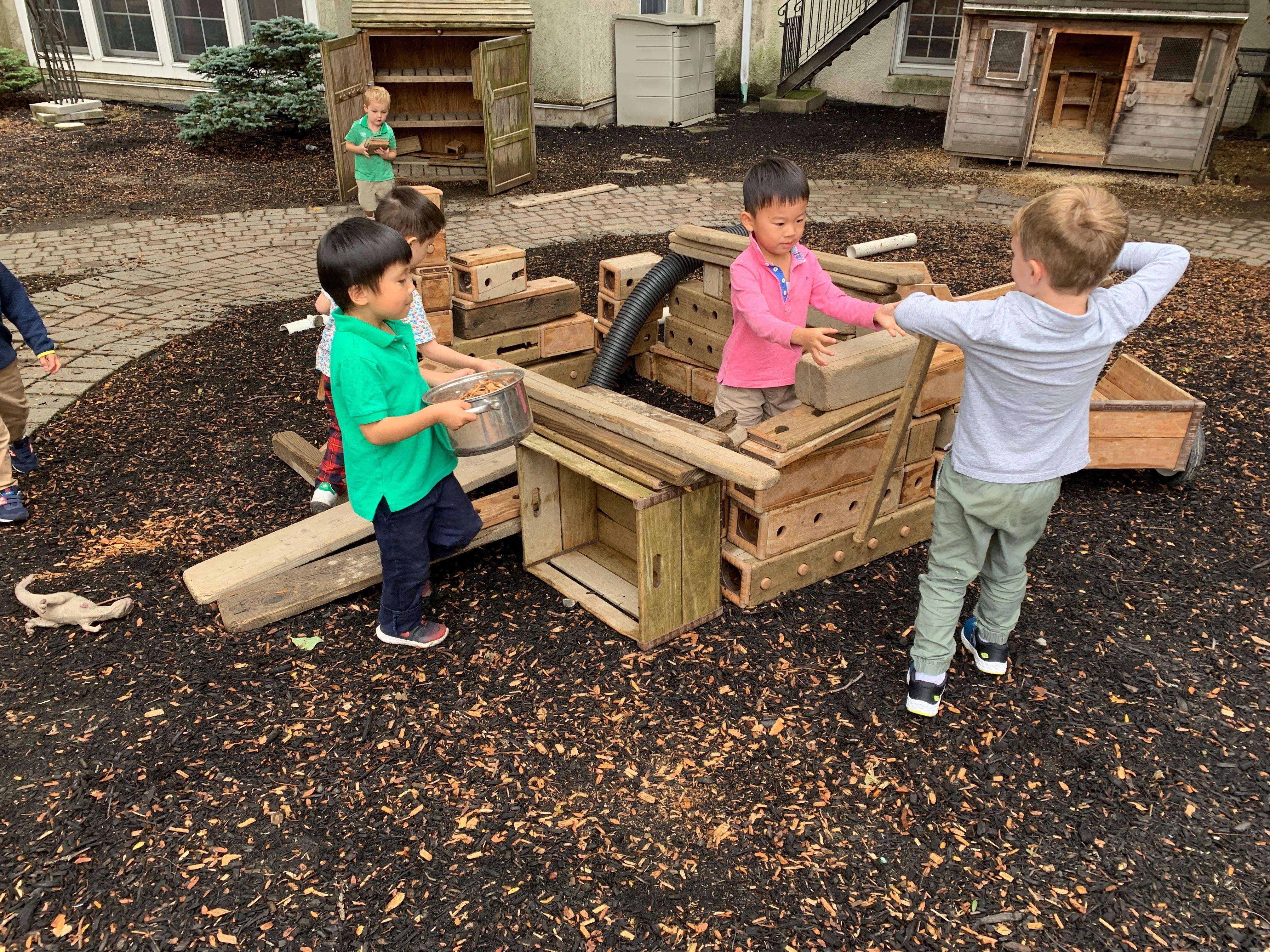
Families entering private pre-kindergarten admissions often find when touring pre-kindergarten programs, it can sometimes seem that things have changed a lot since you were in school and feel almost unrecognizable. This is nothing to worry about. Education has evolved in a positive way and methods and models have diversified.
Try to keep an open mind when touring. Understand that each school has its own practices and methodologies.
.jpeg?width=477&height=636&name=Copy%20of%20YB%20Pre-K%20classroom%20unnamed%20(1).jpeg)
While it’s extremely important to ask questions and thoroughly evaluate a pre-K program, there is a difference between critical appraisal and hunting for flaws. Your visit will be more productive if you seek to learn why a school holds certain views than pointing out areas with which you disagree. Try to be constructive and receptive to the benefits of different pre-K approaches, you may learn something new!
4. Visit a Variety of Schools
Similar to “keeping an open mind,” Kate encourages parents to go so far as to actually visit schools even if they don’t think it will be “the one.” Sometimes you may learn about what qualities and aspects are part of your “perfect” school by clarifying what you don’t like. You might be surprised to find aspects that are important to you, even in schools you weren’t seriously considering. Remember, visiting schools and talking with admissions staff is an educational process for all parties involved.

5. Wait Another Year
Schools assessing private pre-kindergarten admissions look closely at social and emotional readiness. Here at The Fessenden School, we do sometimes find ourselves telling parents their son is not quite ready for our Pre-K program. All children mature and develop at different rates, so while your son may meet the chronological age requirement, he might not yet have social and emotional readiness to allow him to flourish in the pre-K environment and beyond. We believe that readiness and comfort is every bit as important as other cognitive skills. We want boys to establish a strong friend-base and be able to fully integrate into the classroom community. It’s important for your son to establish these connections so he’ll feel comfortable and confident to start stretching himself in the program – stepping beyond his comfort zone – allowing for real learning to happen.
In those situations where we don’t see that level of “readiness,” we encourage parents to let their son enjoy another year in preschool to allow him to grow and mature before applying again to the program. Often the extra year is a real gift for the child. It allows him the time he needs to come into his own. This readiness factor plays a large part in private pre-kindergarten admissions decisions.
6. Ask the Right Questions When Visiting Schools
If you’re starting to visit local pre-K schools, you may be wondering how to make the most of each short visit. Our Pre-K & Kindergarten Private School Visit Checklist is free and contains useful information to help you evaluate pre-K programs, including who to talk to and what questions to ask.